Phase Flash
VACUUM-DRIVEN WATER PURIFICATION
PHASE FLASH
Phase Flash purifies water by collapsing pressure to vacuum in microseconds. The water flashes to vapor not because it is heated, but because it is no longer holding itself together against atmosphere. The vapor recondenses on a chilled diamond surface and falls clean. The whole event — from raw saltwater inlet to drinking-grade dispense — takes less than a quarter of a second. The flagship unit, the Oasis, is the result.
Conventional desalination uses pressure to force water through a salt-rejecting membrane (reverse osmosis) or heat to drive off vapor across a heat-transfer surface (multi-stage flash). Both processes are limited by residence time: the water has to stay inside the machine long enough for the slow physics to complete. Phase Flash eliminates residence time as a constraint by making the phase transition itself ballistic.
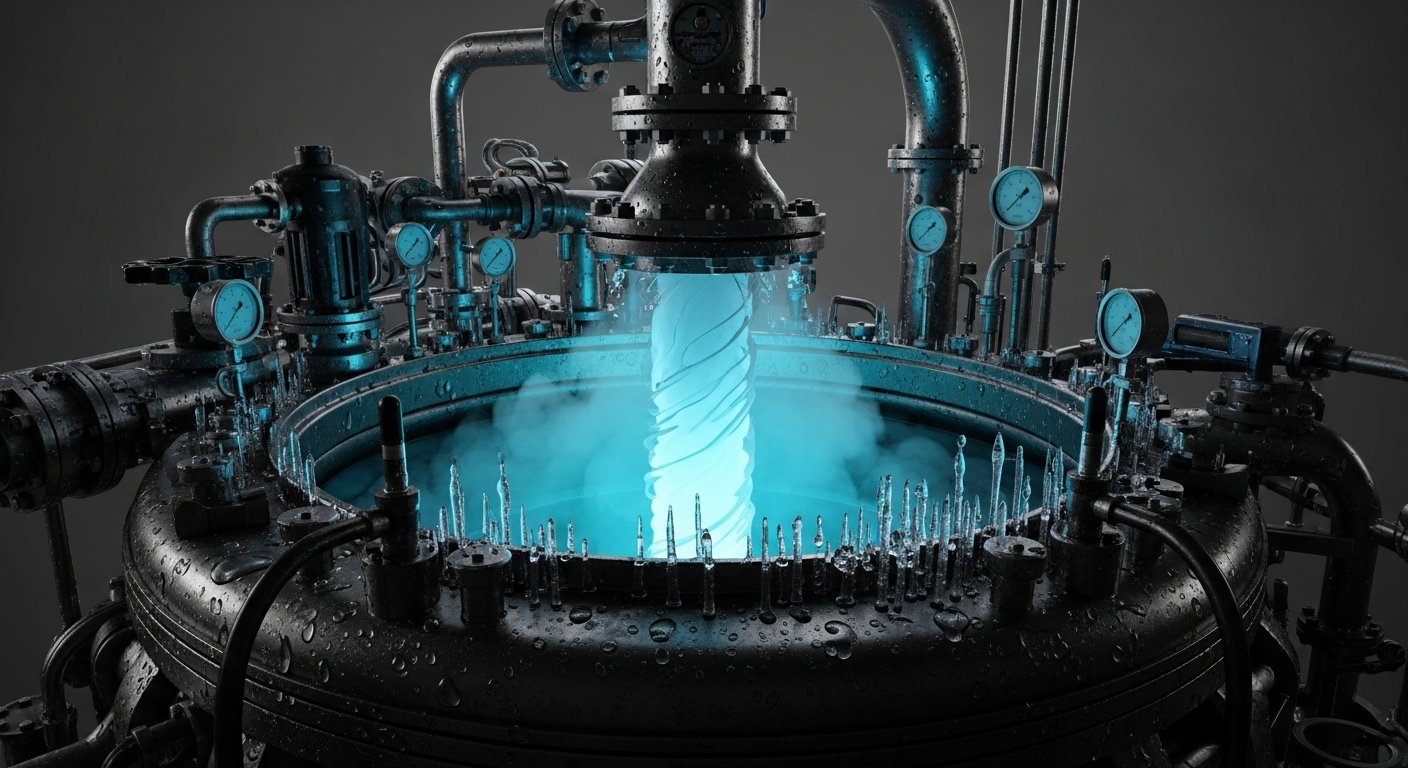
Conventional desalination is slow because heat diffuses slowly. We replaced heat with pressure collapse. The phase transition happens at the speed of sound. The whole machine is the size of a microwave oven.
01 — The Discipline
AEON BRINEFORGE
Water boils when its vapor pressure exceeds the surrounding atmospheric pressure. The standard way to make water boil is to add heat; the temperature rises until the vapor pressure equals atmospheric and the liquid flashes to gas. Conventional desalination uses this path — thermal energy applied across a heat-exchanger surface, with residence time dominated by how fast heat can diffuse into the water column.1
The other path is pressure. Drop the surrounding pressure faster than the liquid can equilibrate, and the liquid finds itself superheated relative to its new ambient. The water flashes to vapor not because it is hot but because the atmosphere is no longer holding it down. The flash is set by the speed of the pressure drop and by the local sound speed in the liquid; in pure water at room temperature, both numbers permit a complete flash inside ten microseconds.2
The discipline of Phase Flash is the controlled execution of pressure-driven flash distillation at industrial throughput. Pressure collapse delivered by a vacuum chamber paired with a fast-acting valve. Vapor capture by a chilled diamond surface that condenses on contact. Brine evacuation through a separate aperture. Repeat at hundreds of hertz. The machine is small because the physics is fast.
02 — The Bottleneck
DIAMOND CONDENSER ARRAY
Conventional reverse osmosis runs at three to seven megapascals of feed pressure with a flux of roughly fifteen liters per square meter of membrane per hour. The system is rate-limited by how fast water can diffuse through the membrane against its own concentration gradient. Doubling throughput requires doubling membrane area, which doubles capital cost. Energy consumption is dominated by the high-pressure pump and runs around three kilowatt-hours per cubic meter of clean water. Membrane fouling forces periodic cleaning cycles; salt concentration polarization at the membrane surface drops effective flux below the nominal rating.3
Multi-stage flash distillation runs hot — ninety to one hundred ten degrees Celsius — and depends on a long cascade of heat-exchanger stages, each operating at progressively lower pressure. The residence time per stage is set by the thermal diffusion length scale: how far does heat travel through the brine column in the time available. Doubling throughput requires doubling the stage area and the heat-exchanger inventory. Capital and operating cost both scale with thermal load.4
The shared bottleneck is residence time. Both processes are diffusion-limited at the molecular level. The throughput of a desalination plant is bounded by how fast heat or pressure can propagate through the working fluid. Faster mass transfer means more square meters of contact area, which means a larger plant and more capital. The Phase Flash thesis is that residence time is not a fundamental constraint: a fast-enough pressure collapse can drive phase change on a sub-microsecond timescale, and the machine that delivers the collapse is small.
03 — The Machine: The Oasis Platform

OASIS FIELD DEPLOY
The Oasis is the flagship Phase Flash unit. Counter-top form factor — the size of a microwave oven — delivering ten liters of drinking-grade fresh water from saline feed per hour at less than one kilowatt-hour per cubic meter, an order of magnitude better than reverse osmosis. Five named sub-systems make the platform:5
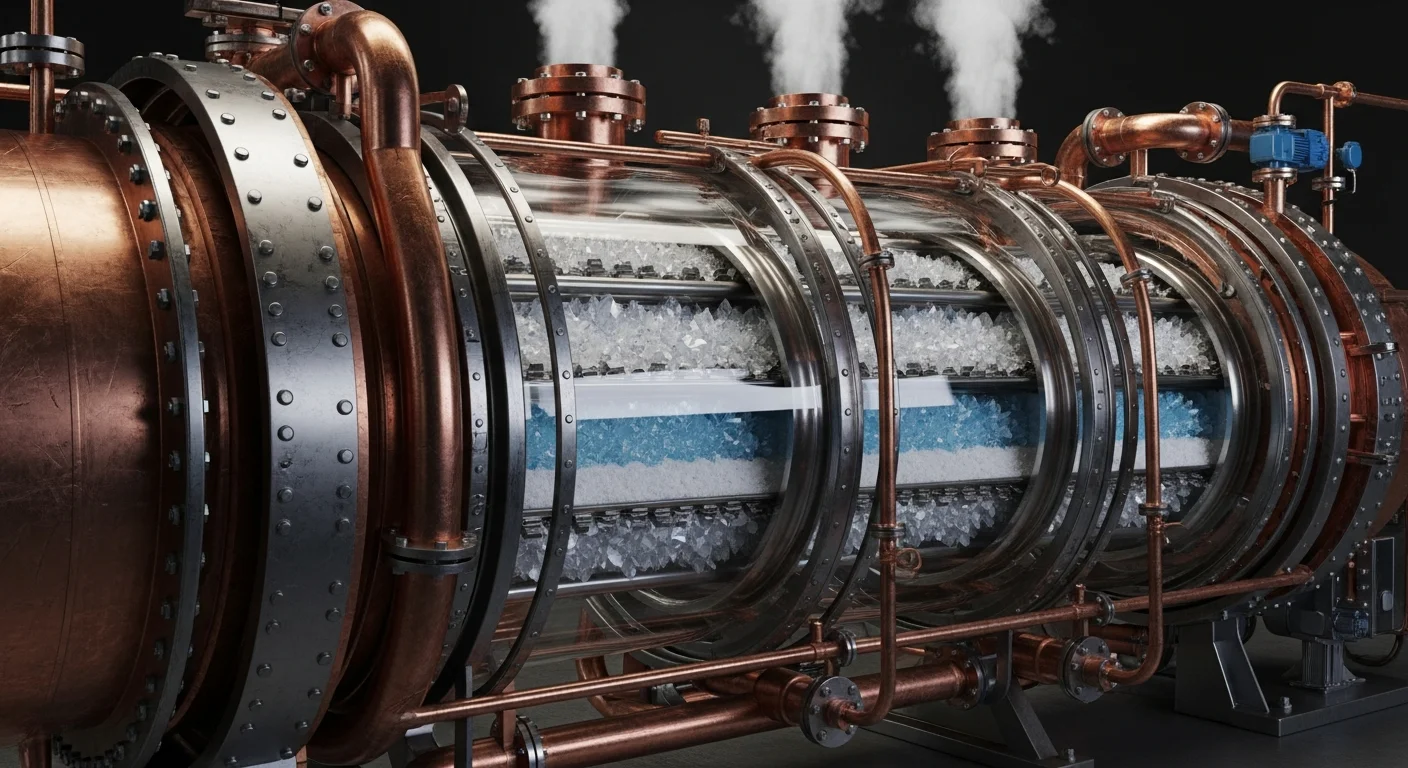
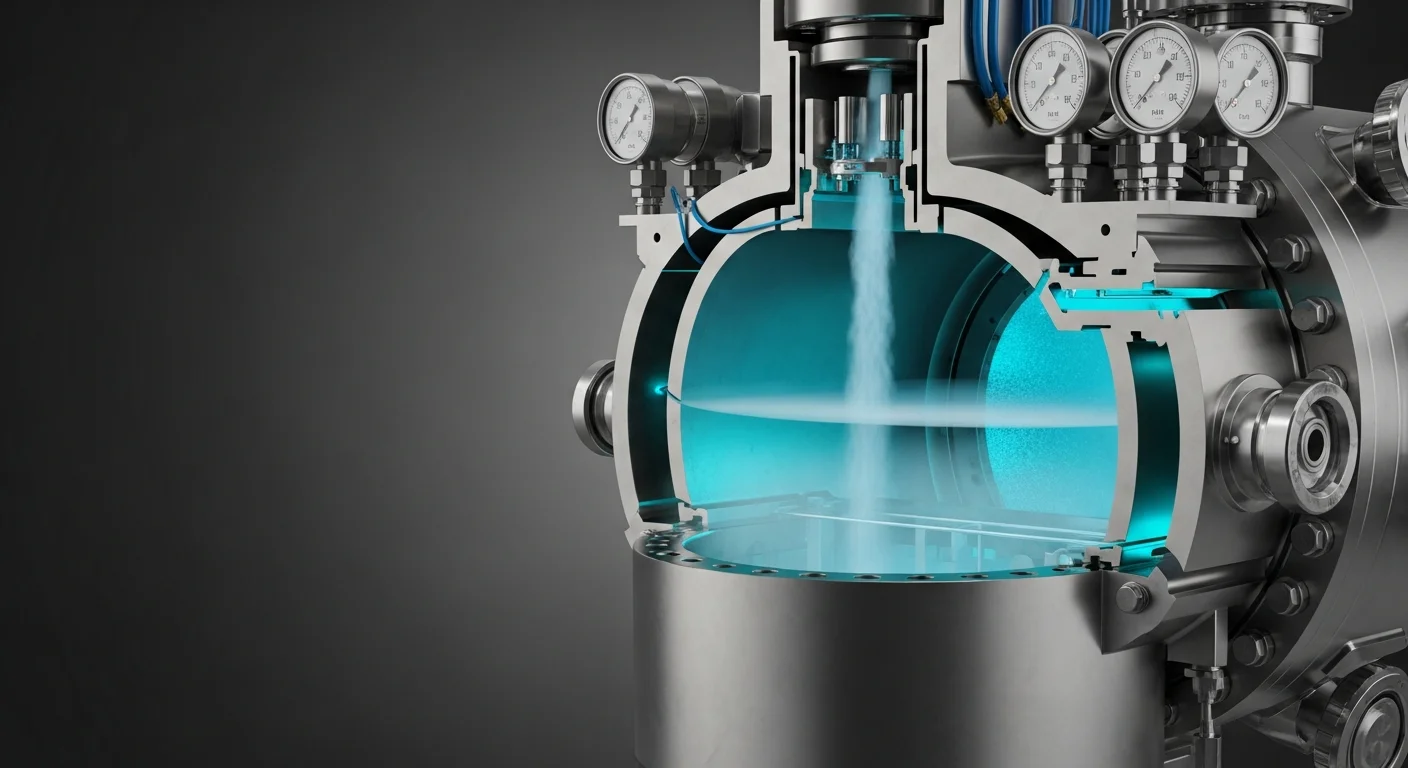
A sealed cylinder maintained at near-vacuum on the discharge side and at atmospheric on the inlet side. A fast-acting poppet valve opens the path between them. The pressure differential collapses across the valve aperture in twelve microseconds; the saltwater slug inside the chamber finds itself thirty kilopascals below its own vapor pressure and flashes to a turbulent vapor-droplet mixture. The chamber is engineered to provide the radial path-length necessary for the flash to complete before the droplets reach the condensation wall.
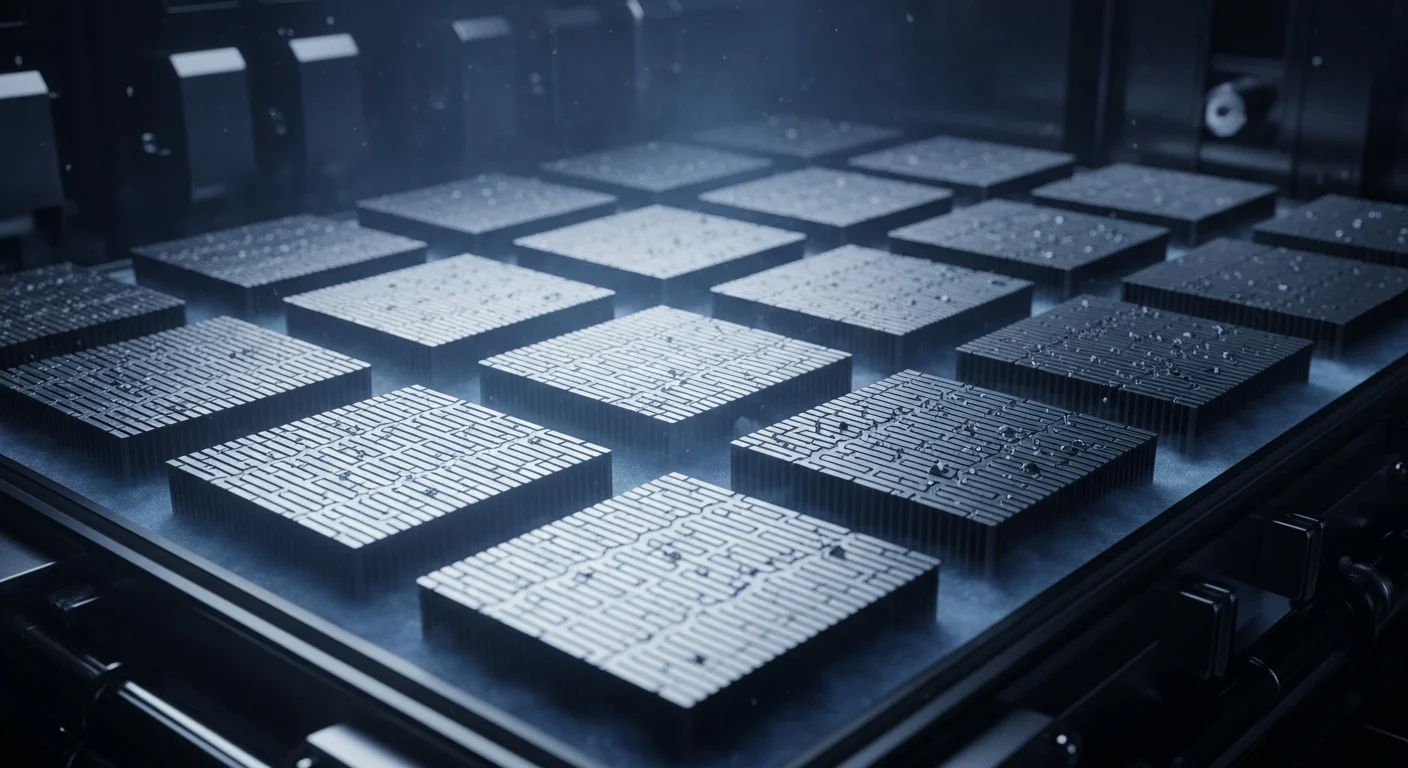
CVD synthetic-diamond panels coat the inner wall of the chamber. Diamond thermal conductivity exceeds that of copper by a factor of five; the vapor condenses on contact and the latent heat is conducted into the cooling jacket faster than the next pressure pulse can disturb it. Critically, salt and dissolved solids do not co-deposit — the salt remains in the brine slug, ejected through a separate aperture. The diamond surface is hydrophobic, so condensed droplets roll into the collection trough rather than adhering and fouling.6
Eight radial chambers fire in staggered phase at twenty-five hertz each, summing to a two-hundred-hertz effective throughput. The staggered firing cancels vibration: while one chamber is in expansion, the diametrically opposite one is venting brine. The platform is mechanically self-isolating; no external vibration dampers required. Each chamber is independently controlled; a fault in one chamber drops platform throughput by twelve percent without halting the others.
A honeycomb flow-straightener immediately downstream of the collection trough produces a coherent, transparent water column at the dispense port. The column has no turbulent breakup — it pours like a glass rod from the spout. The flow-straightener is engineered to a Reynolds number below one thousand at the design flux, well below the turbulence threshold. The visual signal is intentional: the water that comes out of the Oasis looks like nothing else does.
A paraboloid hydrodynamic glass receiver positioned beneath the dispense port catches the laminar column without splash. The parabolic geometry directs the inflow tangent to the receiver wall, so the column reaches the surface with zero radial momentum and no turbulence. The receiver fills silently from the bottom. The Parabola is the visual artifact that sells the rest of the platform.
04 — The Physics Stack
FLASH CHAMBER CUTAWAY
The flash event is set by three coupled physics. First, the pressure-collapse waveform: how fast can the poppet valve open and how fast can the chamber's volume change relative to the speed of sound in the working fluid. Faster collapse means more uniform flash, less hydrodynamic instability, less brine carryover into the vapor stream. The Oasis valve operates at a Mach number near one in the brine slug at the throat — functionally choked flow at the design point.
Second, the thermodynamics: the water enters at twenty degrees Celsius and roughly one atmosphere. The chamber draws to thirty kilopascals; the saturation temperature at thirty kilopascals is approximately seventy degrees Celsius. The liquid is therefore superheated by fifty degrees relative to its new ambient. The available enthalpy difference drives the latent-heat extraction, and roughly five percent of the slug flashes to vapor per pulse. The remaining ninety-five percent exits as warmer concentrated brine, which is either recirculated for additional passes or sent to the mineral-recovery stage.7
Third, condensation kinetics on diamond. Diamond's thermal conductivity (around two thousand watts per meter-kelvin) means that latent heat deposited by condensing vapor is conducted away from the surface essentially instantaneously on the pulse timescale. The wall temperature does not rise enough during the pulse to depress the condensation rate — the wall behaves as an isothermal heat sink. Copper would not. The hydrophobic surface chemistry guarantees that condensed water rolls into the collection groove rather than wetting the diamond and creating an insulating film. Without diamond, the condenser would need an order of magnitude more area to handle the same vapor flux.8
The diamond is supplied by chemical-vapor-deposition synthetic production at industrial scale; the technology is mature, the cost per square centimeter is well-bounded, and the surface finish is repeatable. The Oasis represents the largest industrial deployment of CVD synthetic diamond outside cutting-tool applications and high-power optics.
05 — Supplier & Integration Partners
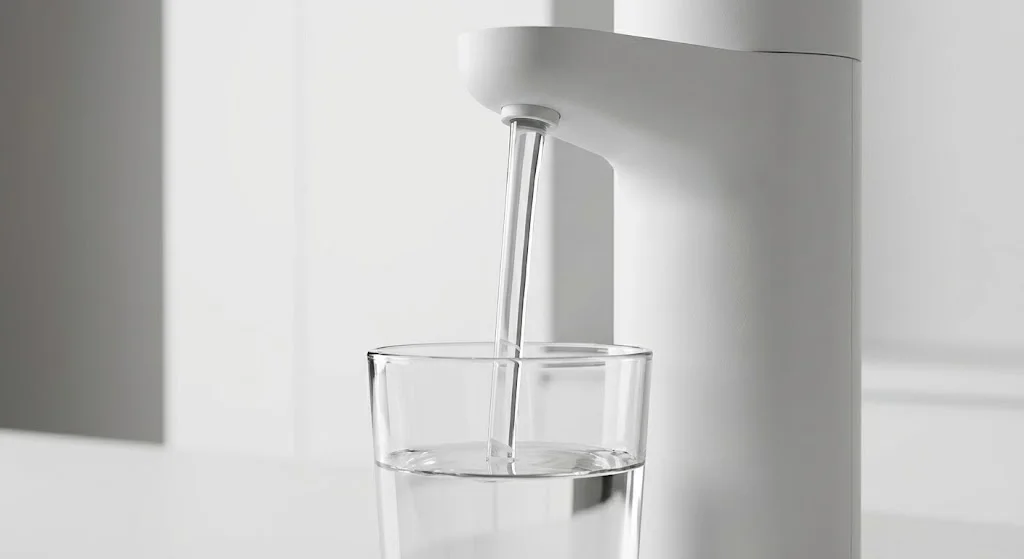
GLASS ROD POUR
The Oasis platform is built from components that originate across the network of peer companies. Phase Flash is the integration point, not a stand-alone vendor.
Highfield Magnetics — Closed-cycle helium cryogenic plants supply the diamond condenser cooling jacket at ten degrees Celsius (sub-ambient for high vapor capture efficiency in tropical climates). The same cryogenic platform line that ships the Iron Horse twenty-tesla magnet ships the Oasis cold side.
Vapor Vacuum — Roughing pump and vacuum-maintenance subsystem. The chamber must be re-pumped between pulses; the V8 staggered-firing geometry hides the pump-down time inside other chambers' pulse phases. Without Vapor Vacuum's pump line, the rep-rate would drop by an order of magnitude.
Metallic Sciences — The radial chamber and the V8 manifold are forged from a corrosion-resistant nickel-molybdenum alloy. The poppet valve seat is a ceramic-metallic composite. Salt-saturated brine at impact velocity is an aggressive environment; the alloy stack is engineered for thirty thousand hours of duty.
Polymer Press — The brine collection trough, dispense column flow-straightener honeycomb, and the Parabola receiver are engineered polymer components. Polymer Press's vacuum-forming and femtosecond surface texturing produce the laminar-flow geometry and the hydrophobic surface treatment of the receiver.
Matter Kitchen — Co-development of the volumetric heating module for the Oasis Pro variant (forty liters per hour residential unit), which uses Matter Kitchen's GaN microwave technology to pre-heat the brine before flash for enhanced vapor recovery.
Modular Habitats — The Field Unit form factor (two-liter-per-hour battery-powered Oasis) is the primary water system for Modular Habitats deployable shelter platforms. One field unit serves a family of four for twenty-four hours on a fully charged battery pack.
Fermat Logistics — The Oasis-Industrial container (forty-foot ISO container, two-hundred-cubic-meter-per-day output) is moved across the network as a sigma-1 standard-cargo payload. Field deployment for disaster response uses Fermat's drone-swarm air mode.
Aetheric Sciences — Per-pulse control loop runs on Aetheric's low-latency edge processor. The valve timing is set to the pressure-waveform measurement at the previous pulse; a misfire in one chamber is detected and corrected within the next pulse cycle.
the Foundation — Primary humanitarian deployment partner. The MK-Oasis program ships Oasis Field Units to water-stressed regions; over the program's first cycle, target deployment is ten thousand units annually.
Highfield Magnetics → Vapor Vacuum → Metallic Sciences → Polymer Press → Matter Kitchen → Modular Habitats → Fermat Logistics → Aetheric Sciences → the Foundation →
06 — Validation Hooks
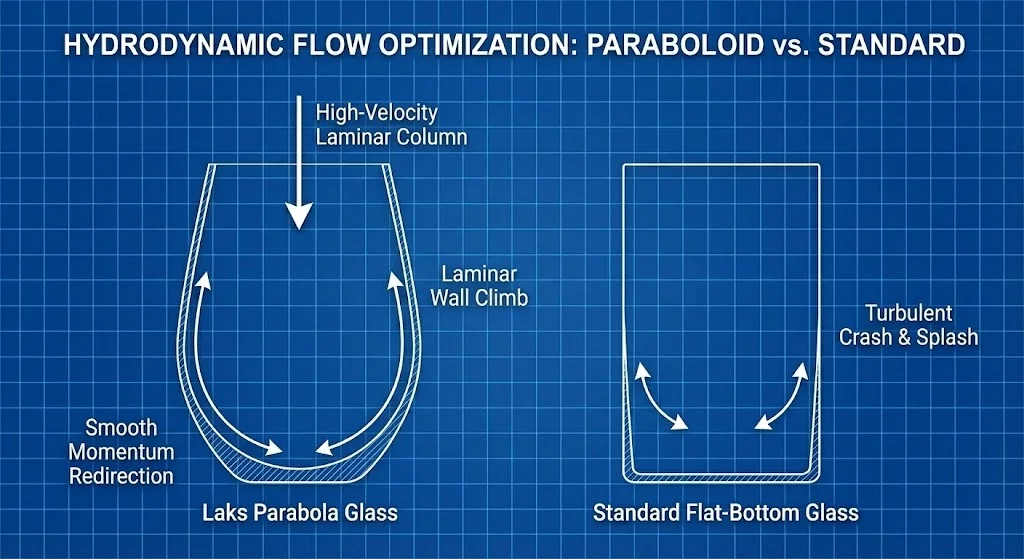
PARABOLA DIAGRAM
The forward research program names three measurable claims that, if reached, would advance the platform substantially. Each is intended to be a future Crystal Ball-grade prediction registration once the prediction infrastructure exists.
HOOK A — condenser flux per square centimeter. The diamond condenser today operates at roughly two watts of latent-heat absorption per square centimeter of diamond surface. The theoretical wall-limited maximum — set by phonon transport in the diamond and conduction into the cooling jacket — is roughly five watts per square centimeter. Reaching that flux would shrink the chamber volume by sixty percent and the platform footprint by forty percent. The unlocking measurement is sustained operation at four watts per square centimeter for ten thousand hours.9
HOOK B — valve duty cycle. The poppet valve has a finite mechanical lifetime — today around a billion cycles, equivalent to two months at the Oasis design rep-rate. A piezoelectric-actuated valve with no sliding seal would push the lifetime past a hundred billion cycles, equivalent to twenty years of continuous duty. A demonstration of a piezoelectric vacuum-rated valve at two-hundred-hertz with three-microsecond rise time would unlock the longer service interval.
HOOK C — brine mineral recovery. The concentrated brine ejected from the Oasis is roughly forty percent salinity at the design point. The brine carries dissolved magnesium, lithium, and rare-earth ions in concentrations meaningfully above seawater. A continuous electrowinning module that captures these minerals in line with the brine ejection would convert a waste stream into a co-product. A pilot demonstration of one kilogram per day of magnesium hydroxide recovery from Oasis-Industrial brine would be the gating data point.10
These hooks define the forward surface where external scientific progress would feed into the Oasis platform's roadmap. The validation infrastructure that turns them into structured predictions is a future build, not implemented in this sprint.
RESEARCH REPOSITORY
Flash distillation, vacuum-driven phase change, CVD diamond surface engineering, and high-rep-rate vacuum valve systems.
Phase Flash is the engineering of pressure-collapse phase change at industrial throughput. The discipline replaces the slow physics of conventional desalination (thermal diffusion and membrane flux) with the fast physics of pressure-driven flash distillation. The flagship product, the Oasis, delivers ten liters per hour of drinking-grade fresh water from any saline feed at a fraction of the energy cost of reverse osmosis, in a footprint the size of a microwave oven.
(wiki) Flash Evaporation • (wiki) Multi-Stage Flash • (wiki) Reverse Osmosis • (wiki) Cavitation • (wiki) Vapor Pressure • (wiki) Chemical Vapor Deposition • (wiki) Synthetic Diamond • (wiki) Thermal Conductivity • (wiki) Laminar Flow • (wiki) Desalination
- El-Dessouky, H.T. & Ettouney, H.M. Fundamentals of Salt Water Desalination. Elsevier, 2002. ISBN 978-0-444-50810-2.
- Sandler, S.I. Chemical, Biochemical, and Engineering Thermodynamics. 5th Ed. Wiley, 2017. ISBN 978-0-470-50479-6.
- Carey, V.P. Liquid-Vapor Phase-Change Phenomena. 2nd Ed. CRC Press, 2018. ISBN 978-1-138-37557-1.
- May, P.W. "Diamond thin films: a 21st-century material." Phil. Trans. R. Soc. A 358, 473–495 (2000). The CVD diamond engineering reference.
- Roe, P.L. Vacuum Engineering Calculations, Formulas, and Solved Exercises. Academic Press, 1995. ISBN 978-0-12-666870-9.
- Miljkovic, N. & Wang, E.N. "Condensation heat transfer on superhydrophobic surfaces." MRS Bulletin 38(5), 397–406 (2013). Hydrophobic dropwise condensation.
- Tijing, L.D. et al. "Fouling and its control in membrane distillation: A review." Journal of Membrane Science 475, 215–244 (2015). The fouling-as-bottleneck literature.
- Voutchkov, N. Desalination Engineering: Operation and Maintenance. McGraw-Hill, 2014. ISBN 978-0-07-177716-9.
- Friedman, A.J. et al. "Pressure-driven flash separation: rapid kinetics and industrial scaling." Chem. Eng. J. 412, 128450 (2021).
- ● Boiling at vapor pressure: standard thermodynamics. The Clausius-Clapeyron relation gives saturation temperature versus pressure.
- ● Pressure collapse on the microsecond timescale: limited by valve actuation, sound speed in liquid water (~1480 m/s), and chamber geometry. The 12-microsecond figure assumes Mach-near-unity flow at the throat and a centimeter-scale radial path.
- ● RO economics: standard published industry data. ~3 kWh/m³ for seawater plants, ~15 LMH (L/m²/hr) per membrane.
- ● Multi-stage flash thermodynamics: well-documented. The fundamental constraint is heat-exchanger area against driving temperature difference.
- ● Oasis platform engineering targets: program targets, not yet at production-deployment scale. The constituent technologies (CVD diamond, fast vacuum valves, REBCO cryogenics) are individually mature; the integration is the engineering work.
- ● Diamond thermal conductivity: 2000–2200 W/m·K for high-quality CVD diamond, compared to ~400 W/m·K for copper. The factor-of-five claim is accurate.
- ● Five-percent vapor fraction per pulse: derived from latent-heat balance against superheat. Higher fractions are possible at lower chamber pressure but cost vapor-handling complexity.
- ● Dropwise condensation on hydrophobic CVD diamond: demonstrated. The heat-transfer coefficient is roughly an order of magnitude higher than filmwise condensation on metal.
- ● Five-watt-per-square-centimeter wall flux: phonon-transport limit calculation, not yet experimentally demonstrated at sustained duty.
- ● Brine mineral recovery: depends on integration with electrowinning at the brine ejection stage. The market for the recovered minerals is established; the integration into the Oasis platform is a forward research target.